

July was a big shipping month.
We launched Nirvana Agent Sandboxes - fast, isolated, persistent agent sandboxes priced 20% below the leading managed providers. We became a BYOC option on Altinity.Cloud, putting a managed ClickHouse® database on the same rack as your workload so your data stays hot. We turned on self-serve billing so teams can spin up without a sales call. We published the most comprehensive agent sandbox comparison in the market. And we kept unpacking the LangChain benchmark on writes vs reads.
Here's what moved.
Nirvana Agent Sandboxes Are Live
Fast, isolated, persistent agent sandboxes that make agent economics work.
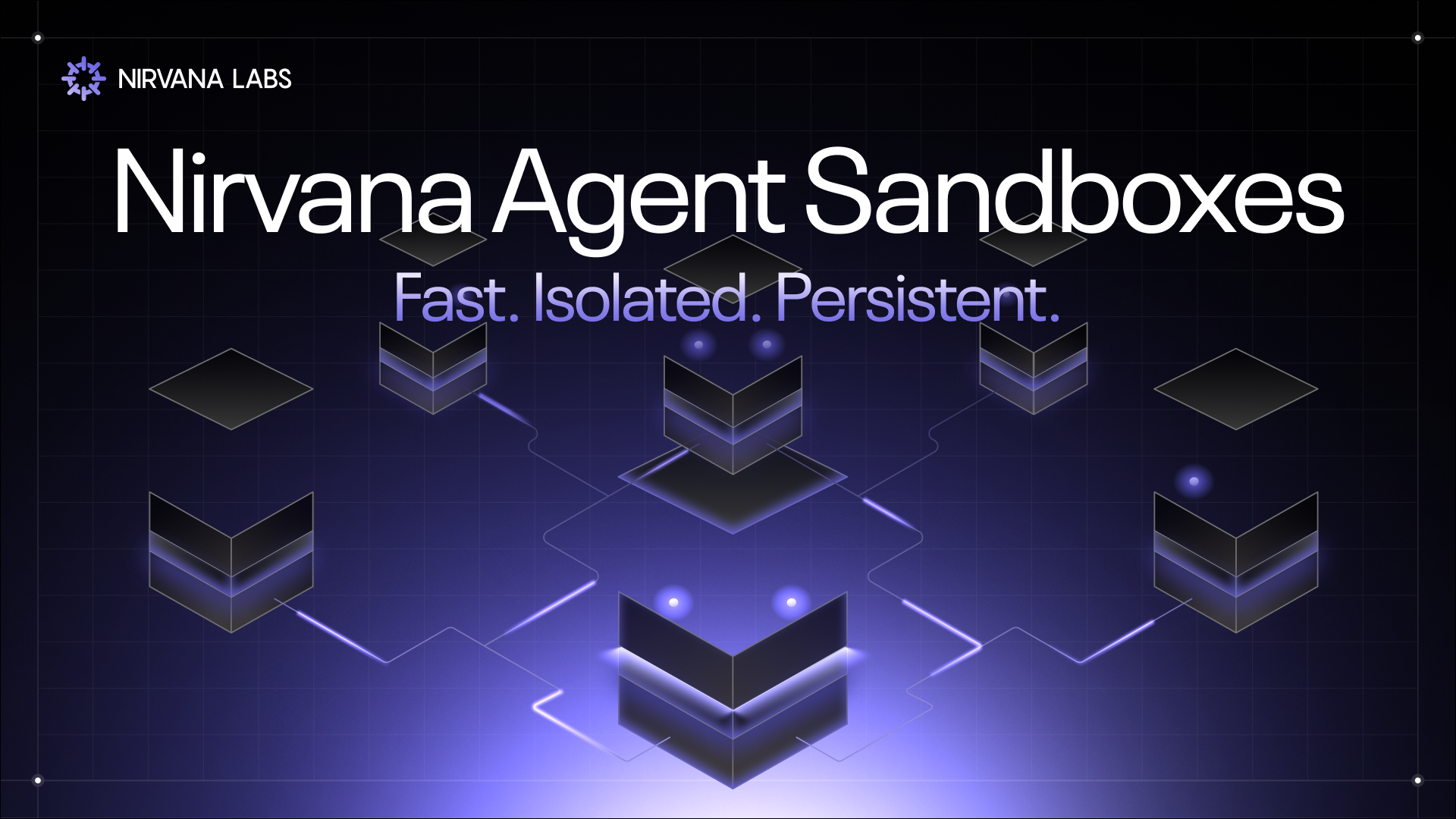
Priced 20% below leading managed sandbox providers, with infra and orchestration on Nirvana's high-performance cloud.
How they work:
- Isolation: Sandboxes run on NKS worker nodes: VMs sealed by a lightweight hypervisor. Each sandbox is a hardened, unprivileged container. Two layers of isolation, plus a dedicated cluster per customer. You never share a kernel with another company.
- Persistence that's actually persistent: Persistent sandboxes pause and resume with state intact because
/workspacesits on a real block volume - ABS, 20K sustained IOPS. No snapshot step. Sub-second resume, both ways. First boot 6–7s. - The sandbox story is the storage story: Most persistent sandboxes are RAM + snapshot pipelines shuffling state around at pause/resume, some with TTLs. Others are S3 mounts with performance caveats. Only a few are real disks that stay mounted. That's why pause/resume speeds vary this much across the market.
Live today. Talk to us: https://nirvanalabs.io/contact
Docs: https://docs.nirvanalabs.io/cloud/compute/agent-sandboxes Blog: https://blog.nirvanalabs.io/nirvana-agent-sandboxes
Nirvana × Altinity: BYOC on Altinity.Cloud
Nirvana is live on Altinity.Cloud as a BYOC option.
Altinity is the largest independent managed service for ClickHouse®. Now teams can run it with the database and workload on the same rack, backed by ABS.
What changes with BYOC on Nirvana:
- Storage: gp3 or equivalent (3,000 IOPS) → ABS (20,000 IOPS included)
- Latency: millisecond round trips → microseconds, same rack
- Egress: paid on every query → $0 internal egress
Same managed service for ClickHouse®. A new compute model. Built for teams whose hot path waits on storage - Web3 indexers, real-time bidders, fintech risk and backtesting, observability platforms, customer-facing SaaS analytics.
Free trial on Altinity.Cloud.
Full blog: https://blog.nirvanalabs.io/nirvana-x-altinity-byoc
Self-Serve Billing Is Live
For teams that want to test workloads without booking a sales call.
We've always offered enterprise-grade products and services. But we get it - sometimes you just want to spin things up and see for yourself.
Sign up, card in, funds in, deploy. → https://nirvanalabs.io
Full blog: https://nirvanalabs.io/blog/nirvana-self-serve-billing
The Ultimate Agent Sandboxes Comparison 2026
Every agent sandbox provider is selling "secure" and "fast," but those words mean different things on every platform.
We read 13 providers' docs - Nirvana, E2B, Daytona, Modal, Vercel, Blaxel, Cloudflare, Northflank, Fly.io, Beam, Railway, AWS, Google - and compared them across the axes that actually matter:
- Speed : boots range from ~80ms to 3s, but persistent agents live in the pause/resume loop
- Isolation : microVM, gVisor, or container, plus whose cluster you're on
- Persistence : live disk, snapshot with TTL, or S3 mount. Same word, four designs.
Every claim sourced to vendor docs or their sites, July 2026.
Full comparison: https://nirvanalabs.io/blog/agent-sandboxes-comparison-2026
Your Database Deserves Better Storage (Series)
Part 1: The Cold Read Problem.
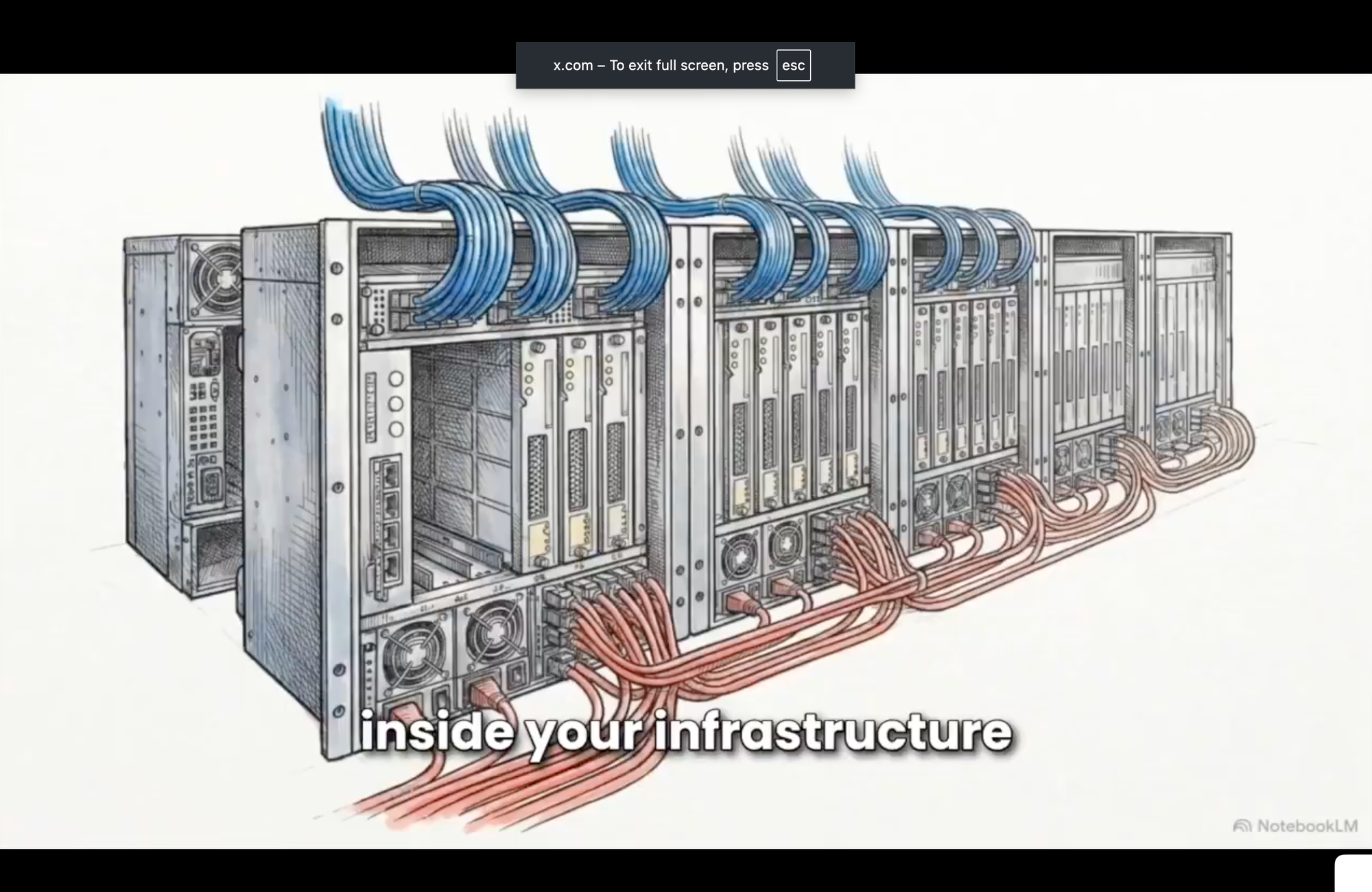
Database slow at scale? Most teams think it's compute. For big analytical scans, compute usually isn't the culprit - storage is. And it fails when you can't afford it: restarts, failovers, cache drops.
We started a new series on why storage is the variable most teams leave on defaults. Part 1 covers the cold read problem - the moment your cache drops and gp3 balloons to tens of seconds while ABS stays sub-second.
Watch Part 1: https://x.com/nirvanalabsai/status/2081726727789900189?s=20
What Is ClickHouse? (And Why It's So Fast)
New explainer on the blog for teams catching up.
Why ClickHouse is fast: a traditional database writes one customer per row -name, email, country, purchase amount, and dozens more fields. Ask for the total purchase amount and it reads every field of every row. ClickHouse keeps separate lists, one per field. A query opens only the columns it needs.
Three ways to run it:
- Self-hosted open source - you own DB + infra
- ClickHouse Cloud - @ClickHouseDB Inc. owns DB + infra (with optional BYOC variant)
- Independent managed providers (e.g. @AltinityDB) - they own the DB; infra can be theirs, yours (BYOC), or your K8s (BYOK)
The part that's easy to miss: managed or self-hosted, ClickHouse still runs on infrastructure, and it's the variable most teams leave on defaults. AWS gp3 ships with 125 MiB/s. If the database is zones away from the workload, latency + egress stack onto every query.
The choice is two questions, not one:
- Who operates the engine - a staffing decision
- What it runs on - an architecture decision
Part two on infra lands soon.
https://nirvanalabs.io/blog/managed-clickhouse-explained
LangChain Benchmark, Part 2: The Write Path
Part 1 measured reads. Part 2 measures the write path: the checkpoint commit that gates every agent step. Slow writes slow thinking-to-acting.
ABS commits agent state 2x faster than AWS, and finishes the workload 24-28% sooner. $118/mo ABS vs $3,710/mo for io2-64k. 31x cheaper.
Full report + repo: https://nirvanalabs.io/benchmark-results/langchain-write
Blog: https://nirvanalabs.io/blog/langchain-write-benchmarking
Persistent Sandbox Speed Has a Direction
A note on sandbox pause/resume that most spec sheets skip.
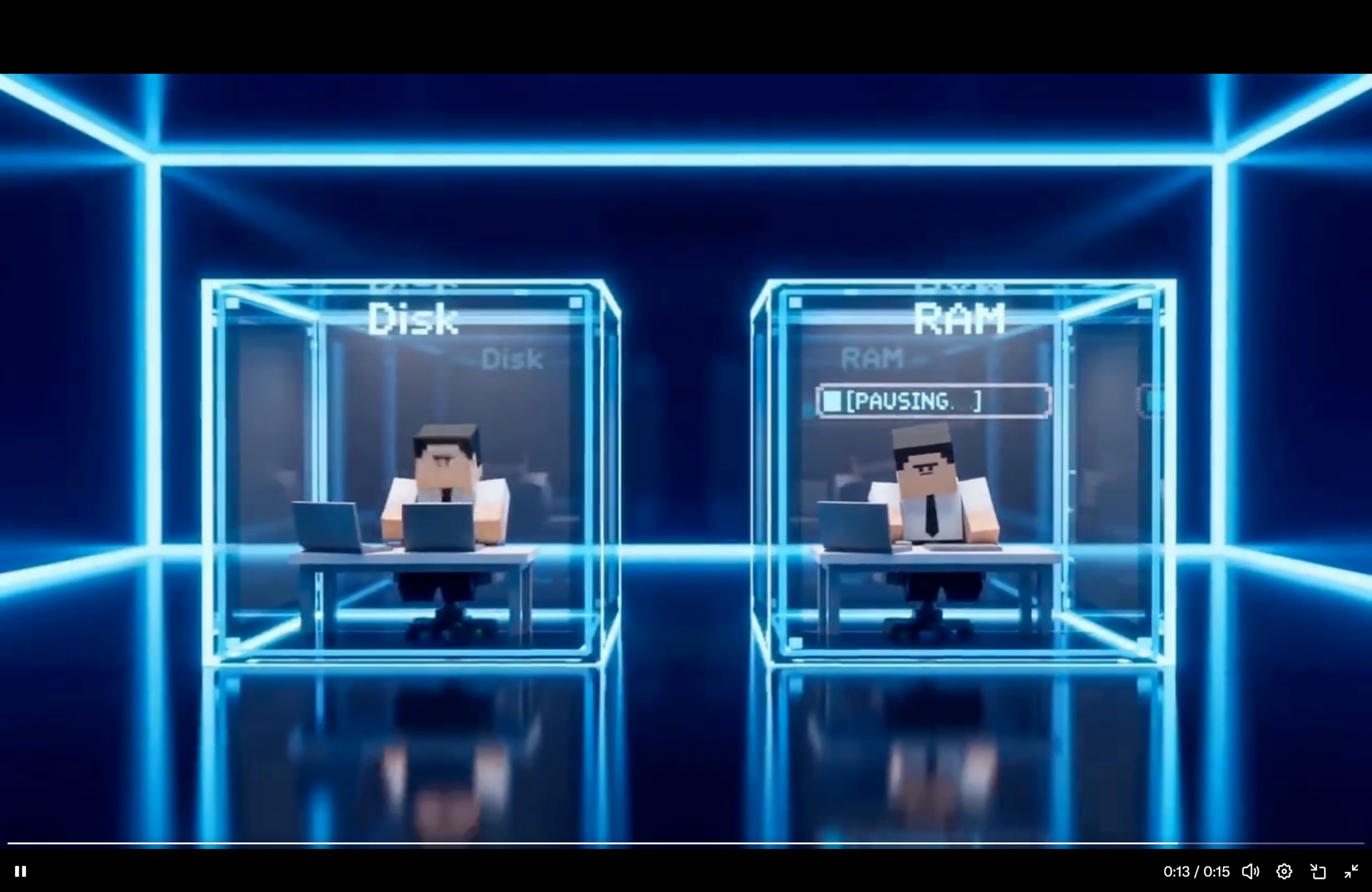
The market's fastest resume (25ms) follows a ~15s entry into standby. The ~1s resume follows a pause that scales at 4s per GiB.
Why care about pause speed if the agent is just waiting anyway? Three reasons:
- Pause time is billed compute. 60s of copying RAM, both directions, every cycle.
- Slow pause can't pause short waits. A 60s pause makes a 30s wait unpausable, so it stays running on the meter. Most agent waits are short.
- The awkward window. User replies 20s into a 60s pause? You wait for the pause to finish before you can even start resuming.
Instant pause has none of these. Pause on a 10-second wait - why not.
https://x.com/nirvanalabsai/status/2082496482360586609?s=20
From the Blog & Community
Persistent > ephemeral. Ephemeral sandboxes are fine when nothing needs to persist. Every serious agent product eventually wants state. Persistent sandboxes are our MOAT.
Hyperscalers aren't the go-to for real-time workloads. If they offer 3,000 IOPS by default and leave you overprovisioned when idle and underprovisioned when busy, it's time to find someone offering more IOPS at a lower price.
"Execution layer for machines" - Altinity is the first proof point. Altinity runs managed service for ClickHouse® on our infra with BYOC - one of the most latency-sensitive workloads out there. Joint customers onboarding. If it holds up real-time analytics, agents are the easy part.
What's Next
More benchmarks in the pipeline, and a case study with a client running Nirvana in production.
Same mission as always: Make performance the default. Not a premium add-on. No throttling. No burst credits. Predictable price next quarter.
Data never stops growing and they deserve better storage!
About Nirvana Labs
Nirvana Labs is a high-performance storage cloud purpose built for blockchain, AI and databases i.e. the most demanding, real-time, stateful workloads. Accelerated Block Storage (ABS) offers 20K baseline IOPS included, no over provisioning. Nirvana Kubernetes Service (NKS) with Karpenter auto-scaling, high clock-speed compute and private networking. Backed by Jump Trading, Crucible, etc with 50+ customers live in production today.
Learn more at Nirvana Labs
Nirvana Cloud | Pricing | Blog | Docs | Changelog | LinkedIn |Twitter | Telegram| YouTube
Related Posts
Nirvana Labs September 2026 Recap
September at Nirvana: $250 signup credit, referrals, the Altinity meetup, a new POC, and guides to harnesses and long-running agents.
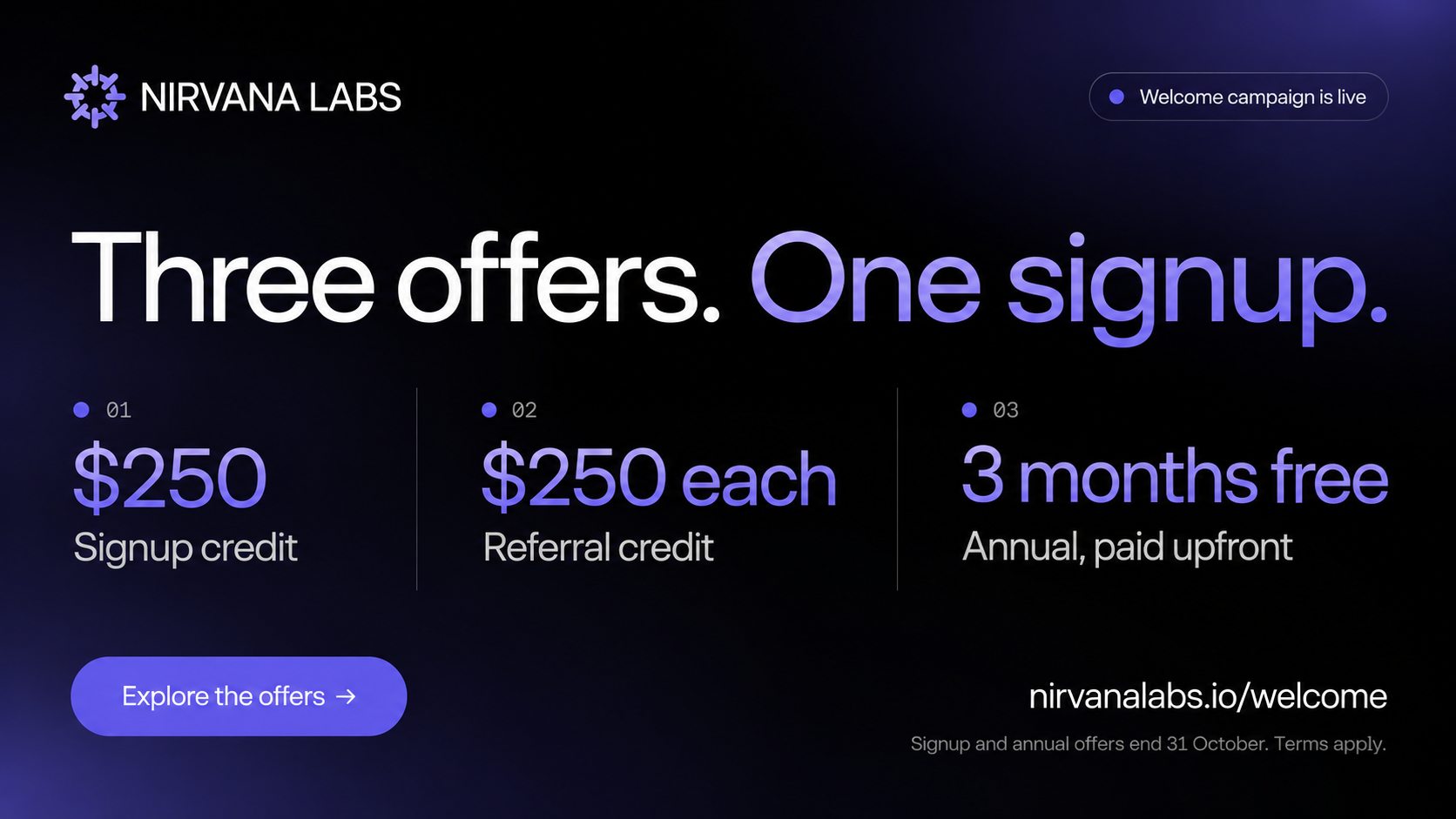
Nirvana Labs Welcome Campaign is Live.
$250 in credit to start. $250 each way when you refer a team. Two or three months free on annual. They stack.
Nirvana: The High Performance Storage Cloud
Why Nirvana is the High Performance Storage Cloud: purpose-built ABS with 20,000 sustained IOPS included, benchmarks against gp3 and io2, who runs on it, and what opens in Q4.
Powering AI, blockchain, and
databases
