Case Study: How Goldsky Uses Nirvana Cloud to Power Real-Time Indexing at Scale
 April Wong
📘 Download the full case study
Compared to when blockchain was born, today’s chains produce more data, faster blocks, and heavier traces. Generic clouds were never built for that kind of workload.
Goldsky solves this with Nirvana Cloud.
Indexing is the process of taking raw blockchain data such as blocks, transactions, and events, decoding it, structuring it, and making it instantly searchable. Without indexing, every dApp would need to scan millions of blocks for each request. Wallets, explorers, and dashboards would be slow, unreliable, or completely unusable.
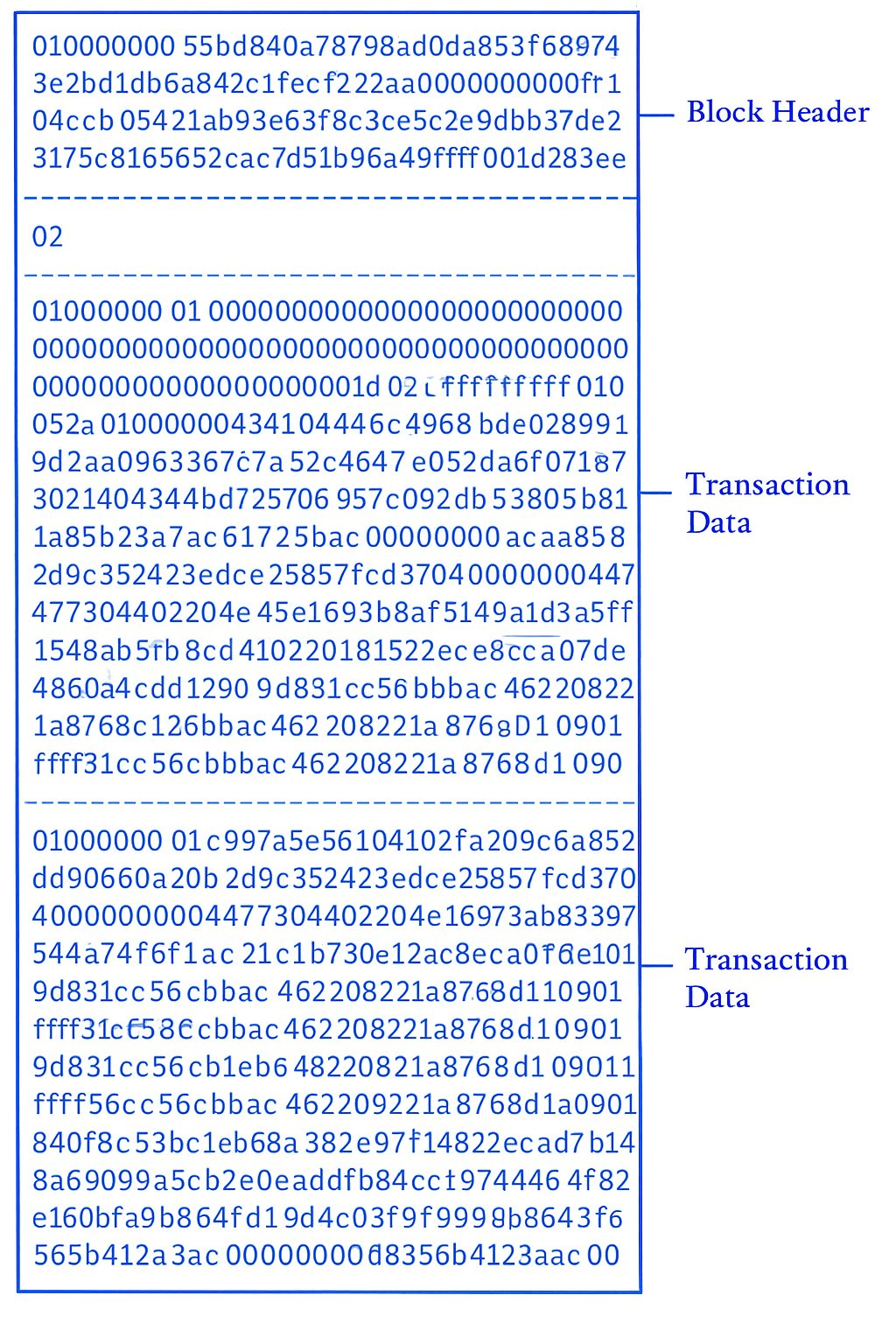
This is an example of what raw blockchain data looks like👇
To stay real time, indexers need two things:
fast ingest from RPC and fast search from databases. When those components live in different clouds, latency stacks up at every step. This leads to delays, stale data, and indexing pipelines that cannot keep up with today’s chains.
Goldsky solves this with Node-Level Colocation powered by Nirvana Cloud.
Here’s the high-level story 👇
Goldsky: Real-Time Data for Web3 at Scale
Goldsky delivers live-streamed blockchain data and production-grade indexing for teams across the ecosystem.
Their workload has a unique profile:
- Heavy I/O
- Massive memory use
- Trace-heavy RPC calls
- Multi-TB always-hot datasets
- Real-time query requirements
- Predictable performance needed 24/7
Goldsky set out to find a cloud setup that could match that profile without the cost overhead of public cloud and without the instability of cheaper alternatives.
They needed something different:
Compute, storage, and nodes living side-by-side, tuned for Web3’s indexing workload.
How Nirvana Cloud Fits In
Goldsky began by colocating dedicated RPC nodes on Nirvana - immediately reducing cross-cloud latency and stabilizing trace-heavy workloads.
But as their Elasticsearch footprint grew, the next step became clear:
Search and indexing must live next to the nodes or the dataset could never stay truly always-hot.
So Goldsky moved their Elasticsearch clusters onto Nirvana’s cloud, placing:
- Dedicated RPC nodes
- Elasticsearch clusters
…all inside the same performance environment.
Once colocated, the impact was immediate:
- Query latency dropped from ~15ms to <5ms
- Trace-heavy RPC pipelines became stable and predictable
- Large-scale indexing ran without cold tiers or caching layers
- Always-hot datasets became truly “always-hot” and instantly queryable
- Cross-cloud egress dropped by 90% via Nirvana Connect
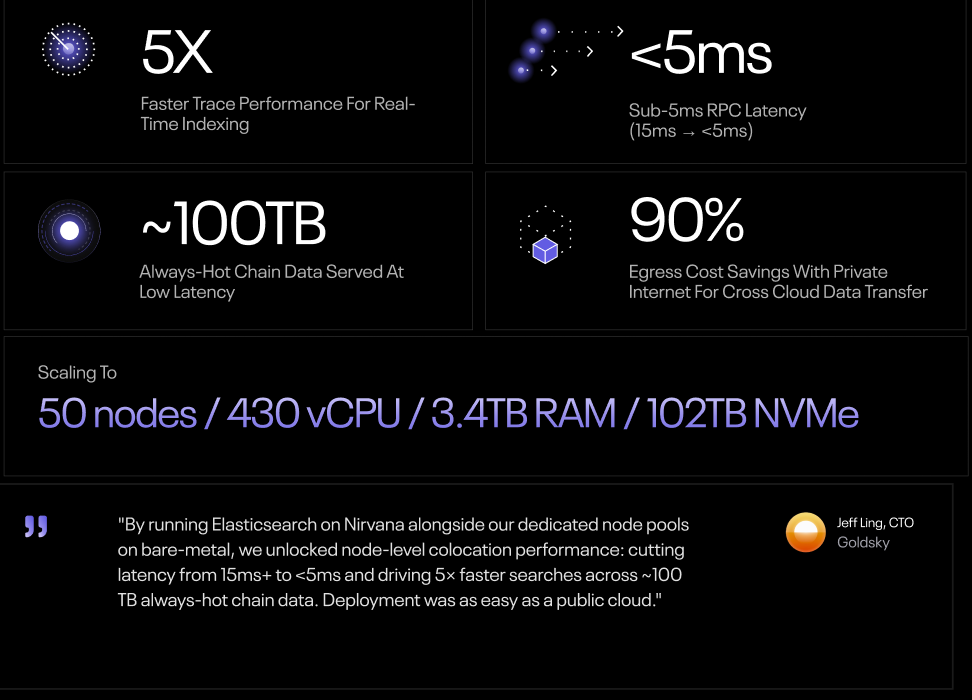
Today, Goldsky supports always-hot chain data, real-time subgraph indexing, and ultra-low latency search across large datasets, all by colocating Elasticsearch clusters and dedicated RPC nodes directly on Nirvana’s bare-metal performance cloud. This setup is exactly what Web3 indexing workloads require — and what generic clouds cannot replicate.
📘 Download the Full Case Study
See the full breakdown of architecture, performance data, benchmark results, and configuration details.
The Web3 Performance Cloud
Learn more at Nirvana Labs
Nirvana Cloud | Blog | Docs | Twitter | LinkedIn
Related Posts
Why Database p99 Latency Spikes During Backups and Checkpoints
Diagnose database latency during maintenance with a controlled mixed-load test. Separate storage contention, checkpoint work, CPU pressure and client queueing.
Kubernetes Volume Snapshots vs Backups: What Your Database Needs
Compare snapshots and database backups by consistency, failure domain, retention and restore results. Includes a practical Kubernetes recovery acceptance test.
How to Share Persistent State Across Multiple AI Agents
Separate workspaces, checkpoints and shared records so multiple agents can coordinate safely, recover unfinished work and avoid overwriting each other.
Powering AI, blockchain, and
databases
